

N2 Route Portugal: Where to Stop, Sleep and Eat
A Practical Guide (2025/2026) full of local tips!
The N2 — or Estrada Nacional 2 — is Portugal's answer to Route 66. Stretching 739 kilometres from Chaves in the north to Faro on the Algarve coast, it passes through 35 municipalities, 13 rivers and 11 mountain ranges. This guide covers the essential stops, the best places to sleep and eat, and all the practical information you need to plan your N2 road trip — whether you're driving, cycling or travelling by motorbike.
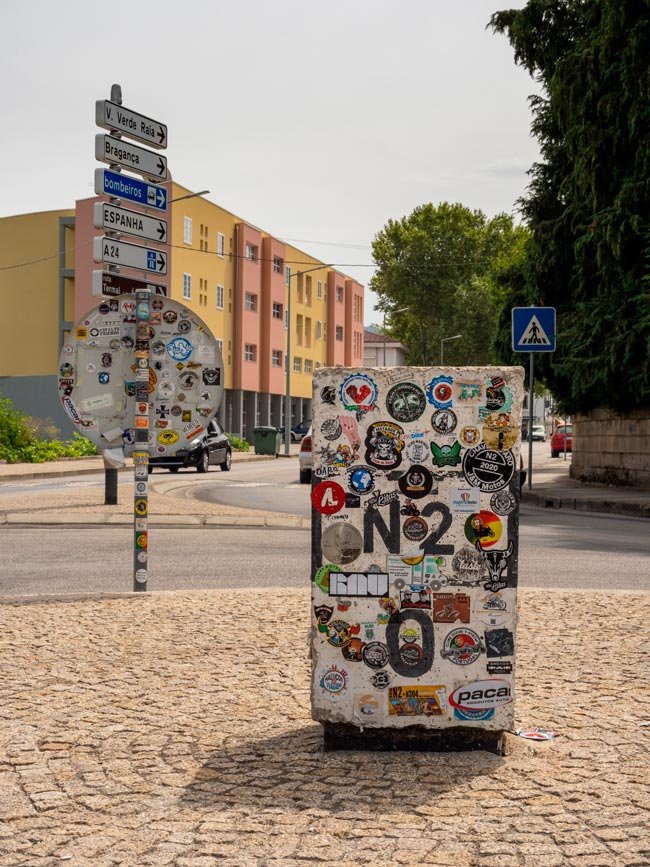
Table of Contents
What is the N2 Route in Portugal?
The Estrada Nacional 2 (EN2) was established in 1945 to connect the north and south of Portugal through its authentic interior. While Portugal’s motorways were built later and now run parallel, the N2 was largely left as it was — a quiet, winding country road through villages and valleys that most tourists never reach.
Today it attracts motorcyclists, cyclists, campervan travellers and slow-travel road trippers. You can drive the full 739 km in around 11 hours non-stop, but that’s missing the point entirely. Most travellers take 4 to 7 days.
Key facts:
- Total distance: 739 km
- Starts: Chaves (Kilometre 0, northern Portugal)
- Ends: Faro (Algarve coast)
- Recommended time: 4–7 days by car; 7–15 days by bicycle
- Best seasons: April–June and September–October
- N2 Passport: Available at tourist offices in Chaves or Faro — collect stamps in each of the 35 municipalities along the way
Section 1 — The North: Chaves to Viseu (approx. 200 km)
The northern stretch is the most dramatic. The road climbs through mountain hairpins, terraced vineyards and river valleys. This is Douro wine country — the views over the river from the road are simply extraordinary.
Must-stop: Peso da Régua — the heart of the Douro wine region. Take a boat trip on the river, visit a quinta for a wine tasting, and stay the night so you can watch the light change over the terraced hillsides at dusk.
Must-stop: Lamego — a beautifully preserved Baroque town. Climb the 686 steps of the Nossa Senhora dos Remédios staircase for panoramic views over the valley.
Must-stop: Viseu — the largest city on the N2. Allow at least two hours to wander the medieval centre, visit the cathedral and the Grão Vasco Museum of Portuguese painting.
Section 2 — Central Portugal: Viseu to Abrantes (approx. 200 km)
The landscape softens here into pine and eucalyptus forests, river beaches and schist villages. This is the quietest and least-visited section of the N2 — and arguably the most beautiful for slow travel.
Must-stop: Góis and Lousã — gateway to the Aldeias do Xisto (Schist Villages), traditional stone villages tucked into forested hillsides. Seek out a praia fluvial (river beach) for a swim.
Must-stop: Sertã — known for its gastronomy. Try maranho (a local stuffed sausage) and bucho, and stop at the beautiful 17th-century Ponte Filipina bridge over the Zêzere River.
Must-stop: Pedrógão Grande — the Praia Fluvial do Cabril offers floating pools in the Zêzere reservoir, kayak rental and boat trips. The Hotel da Montanha sits on top of the mountain with 360° views.
Section 3 — The Ribatejo: The N2 Near Ferreira do Zêzere and Abrantes (approx. 50 km)
This is where the N2 passes closest to us at Quinta da Cerejeira — and it’s one of the most rewarding sections for travellers who want to combine a road trip with rest, nature and history.
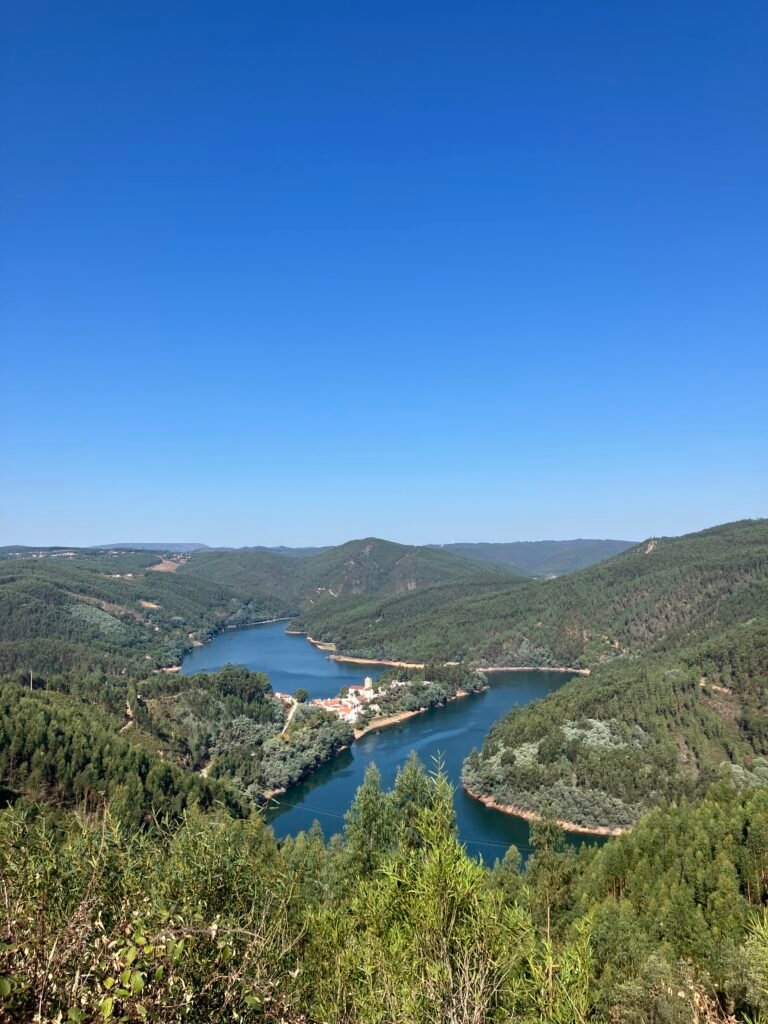
The Zêzere River runs through this entire region, and the Barragem de Castelo de Bode — one of Portugal’s largest reservoirs — is just 5 minutes from our quinta. The landscape here changes dramatically: the mountains of central Portugal give way to rolling green hills, olive groves and the wide Tagus valley.
Must-stop: Ferreira do Zêzere — the small town adjacent to Quinta da Cerejeira, on the banks of the Barragem de Castelo de Bode. Swim, kayak, or simply sit by the water and watch the light reflect off the reservoir. This is one of the most serene spots on the entire N2.
Must-stop: Dornes — a tiny Templar village on a peninsula in the Zêzere River, 15 minutes from Ferreira do Zêzere. Its 15th-century pentagonal tower is one of the most photographed spots in central Portugal. From the viewpoint, the river wraps around the village on three sides. Do not miss this.
Must-stop: Tomar — 20 minutes from Ferreira do Zêzere. The Convento de Cristo, a UNESCO World Heritage Site built by the Knights Templar in the 12th century, is one of Portugal’s most important monuments. Allow at least 2 hours. The town itself has a beautiful riverside park and a weekly market on Fridays.
Must-stop: Abrantes — where the N2 crosses the Tagus River. The castle above the town offers extraordinary views over the river, and the riverside promenade (Aquapolis) is perfect for an evening walk. Try Palha de Abrantes — the local egg-yolk sweet that has been made here for centuries.
Overnight tip for this section: Quinta da Cerejeira (Ferreira do Zêzere) is ideally positioned as a base for 1–2 nights on the N2. We have camping pitches and fully equipped apartments and studios, a swimming pool, and yoga and pilates classes. Rated 8.9/10 on Booking.com (158 reviews) and 4.7/5 on Google (435+ reviews). Dogs are welcome. Direct booking: cerejeira.com
Section 4 — The Alentejo: Abrantes to Faro (approx. 290 km)
After Abrantes, the N2 crosses the Tagus and enters the Alentejo — one of the most distinctive landscapes in Europe. Rolling cork oak plains, whitewashed villages and vast silence. The road straightens out here, making for easier driving after the winding central section.
Worth a detour: Almourol Castle — built on a tiny river island by the Knights Templar in the 12th century. Take the short boat crossing from the quayside at Vila Nova da Barquinha, just off the N2. One of Portugal’s most dramatic sights.
Must-stop: Ponte de Sor — a charming Alentejo town with impressive street murals and a lively riverside park. Look out for the cork oak groves that become dominant here — this is the heart of Portuguese cork country.
Must-stop: Montemor-o-Novo — explore the hilltop castle ruins and the quiet, authentic town below. A perfect lunch stop.
Final leg: Castro Verde to Faro — the southern Alentejo is one of Europe’s most important bird habitats. Look for Great Bustards, Iberian Imperial Eagles and storks in the open plains. The Serra do Caldeirão mountain pass just before Faro is a beautiful final climb before descending to the Algarve coast.
Where to Eat on the N2: Regional Specialities by Section
The N2 is a journey through some of Portugal's most distinctive regional cuisines. Here is what to look for in each section:
North (Chaves to Viseu): Pastéis de Chaves (flaky meat pastries) in Chaves. Douro wines and rojões (fried pork) in the Régua area. Viriatos (sweet pastries) in Viseu.
Central (Viseu to Sertã): Bolo-podre (honey cake) in Castro Daire. Maranho and bucho (stuffed meats) in Sertã. River trout (truta do rio) throughout the Zêzere valley.
Ribatejo (Ferreira do Zêzere / Tomar area): Bacalhau (salt cod) cooked in every possible way. Palha de Abrantes (sweet egg pastry). Fresh river fish from the Zêzere. Ribatejo wine — underrated and excellent value.
Alentejo (Ponte de Sor to Faro): Migas (bread-based side dish), carne de porco alentejano (pork with clams), açorda (garlic and bread soup). Local olive oil, which is some of the best in Portugal. Alentejo wines, which have won international awards in recent years.
How Many Days Do You Need for the N2?
Duration & What you can do
3 days
Drive the full route with minimal stops. Not recommended — you'll miss everything.
4–5 days
Cover the main highlights with one overnight in the Douro, one in central Portugal (e.g. Ferreira do Zêzere area), one in the Alentejo.
6–7 days
The ideal pace. Time for detours, river beaches, a wine tasting in the Douro, and a relaxed dinner in Tomar.
10–15 days
Cycling pace. Allows full exploration of each section without rushing.
Practical Tips for Driving the N2
The road:
The N2 is a traditional country road, not a motorway. Expect winding sections, narrow villages and occasional slow trucks. This is part of its charm. Give yourself more time than Google Maps suggests.
The N2 Passport:
Pick one up from the tourist office in Chaves (if starting north) or Faro (if starting south). Collect stamps at hotels, restaurants and town halls in each of the 35 municipalities. It makes a unique souvenir and gives you a reason to stop in smaller towns you might otherwise pass through.
Best direction:
North to south (Chaves to Faro) is the most popular direction. Driving into the light in the mornings and with the sun at your back in the afternoons works well. Many cyclists go north to south to end near Faro airport.
Fuel:
Fill up in larger towns. Some rural stretches have no petrol stations for 40–50 km.
Mobile coverage:
Good in towns, patchy in rural sections. Download offline maps before you go.
Best time to travel:
April–June and September–October. July and August are very hot in the Alentejo (often 40°C+) and busy on the coast. Winter is quiet and mild in the south, but cold in the north.
Where to Sleep on the N2: Our Recommendations by Section
Douro
Peso da Régua or Lamego — many quintas and guesthouses
Central Portugal
Sertã (Convento da Sertã hotel) or Pedrógão Grande (Hotel da Montanha)
Ribatejo / Tomar area
Quinta da Cerejeira, Ferreira do Zêzere — camping, studios and apartments; pool; yoga; rated 8.9/10 on Booking.com
Alentejo
Ponte de Sor or Montemor-o-Novo or Castro Verde
The N2 starts at Kilometre 0 in Chaves (northern Portugal, near the Spanish border) and ends in Faro on the Algarve coast.
Technically yes — it takes around 11 hours non-stop. But doing so would mean missing the entire point. We recommend 4–7 days minimum.
Yes. The N2 is one of Europe’s best long-distance cycle routes. Allow 7–15 days. The best cycling seasons are May–June and September–October to avoid summer heat in the Alentejo.
The N2 passes directly alongside Ferreira do Zêzere and the Barragem de Castelo de Bode. The area is one of the most beautiful overnight stops on the central section of the route, with access to water sports, the Templar village of Dornes, and the UNESCO-listed Convento de Cristo in Tomar (20 km).
At the tourist office in Chaves (if you start in the north) or Faro (if you start in the south). Some tourist offices along the route also have them. The passport has 35 pages — one for each municipality — with space for a stamp from each.
Yes. The N2 is popular with campervan travellers. Note that some sections through villages are narrow. There are several campsites along the route, including Quinta da Cerejeira in Ferreira do Zêzere, which has 25 pitches, a swimming pool, and full facilities.
About the Authors
This guide was written by Sanne and Emile, owners of Quinta da Cerejeira in Ferreira do Zêzere. We emigrated from the Netherlands to Central Portugal and have been living alongside the N2 since 2024. Our quinta is located directly on the N2 corridor and we welcome travellers every year who are completing the route.
📍 Quinta da Cerejeira | Rua D. Maria Fernanda da Mota Cardoso 902, 2240-333 Ferreira do Zêzere 🌐 cerejeira.com | 📧 info@cerejeira.com ⭐ 4.8/5 on Google (435+ reviews)
Camping open 28 February – 31 October. Studios and apartments open year-round.